Yustine Signature: Bringing Elegance to a Café Brand with a Signature Script Font
Opening the Project: A Blank Canvas and a Fresh Font Choice
When I first opened the brand board for a new local café project, I knew the typography would set the tone. The client wanted something warm, inviting, and just a little whimsical — something that felt personal but still professional. That’s when I remembered Yustine Signature, a script font I’d seen floating around design communities. It promised a clean, smooth flow with that handwritten charm that’s so hard to replicate with standard typefaces.
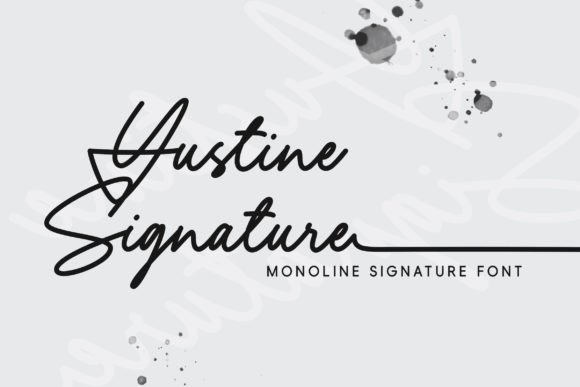
First Impressions: A Font That Feels Like a Signature
At first glance, Yustine Signature delivers exactly what its name suggests — a script that feels like a personal signature. It’s not overly ornate like some calligraphy fonts, nor is it too casual like a scribbled note. Instead, it strikes a perfect middle ground. The smooth curves and natural rhythm make it feel like someone just picked up a pen and wrote the word out effortlessly.
For the café’s logo, I started with a simple mockup — just the name in Yustine Signature over a warm cream background. Instantly, it gave the brand a sense of authenticity and warmth. It wasn’t just a logo anymore; it felt like a story was being told through the typography.
Logo Design and Brand Identity: Where Yustine Signature Shines
One of the biggest challenges in branding is making sure every element feels cohesive. With Yustine Signature, I found a font that could carry the brand voice across multiple touchpoints. We used it primarily as the logo typeface, but also for accent text on packaging and social media headers.
What really stood out was how well it worked in both print and digital formats. On a printed business card, it looked elegant and handcrafted. On the café’s website, it maintained its clarity and character even at smaller sizes. Of course, I made sure to test it across different mediums before finalizing — a step I always recommend when working with script fonts.
Designing for Real-World Use: Packaging, Social Media, and More
As we moved into packaging design, I placed Yustine Signature on coffee bags, label stickers, and menu cards. Because of its clean and smooth vibe, it never felt overwhelming. It added a touch of personality without distracting from the product or the overall brand aesthetic.
For social media graphics, I paired it with a clean sans serif to create visual contrast and hierarchy. Yustine Signature was used for the main brand name or a key tagline, while the sans serif handled the supporting text. This combination worked beautifully — the script added warmth and personality, while the sans serif grounded the design with clarity and readability.
Font Pairing: Balancing Elegance with Practicality
Speaking of pairings, Yustine Signature is a natural fit with modern sans serif fonts. For this project, I used a light-weight sans for body text and secondary headlines, which let the script shine without sacrificing legibility. If I were designing for a more formal brand, I might pair it with a serif instead — perhaps a soft, low-contrast serif that complements its organic flow.
It’s worth noting that Yustine Signature is best used as a display or headline font. While it reads well in short bursts, it’s not ideal for long paragraphs. That makes it perfect for logos, brand accents, and visual storytelling — not for body copy.
Testing Before Committing: A Designer’s Best Practice
Before locking in any font for a brand system, I always test it in context. For Yustine Signature, I created a few different mockups: a business card, a shop sign, a product label, and a homepage hero section. Each of these gave me a sense of how the font would behave in real-world applications.
I also checked for consistency across formats. It looked great in print and on screen, and I was happy to find that it maintained its character even when scaled down. That’s not always the case with script fonts, which can become muddy or illegible if not well-designed.
Technical Considerations: Styles, Licensing, and Compatibility
From a technical standpoint, Yustine Signature comes with a variety of alternates and ligatures, which helped me customize the look for different applications. I especially appreciated the stylistic sets that allowed me to tweak the baseline and spacing for optimal visual flow.
The font also includes standard multilingual support, which was a bonus since the café plans to expand its menu to include international items. And of course, the commercial license made it easy to use across all brand assets — from digital templates to merchandise and packaging design.
Final Thoughts: A Font That Adds Personality Without Overcomplicating the Design
At the end of the day, Yustine Signature proved to be a smart, elegant choice for this branding project. It brought a sense of warmth and individuality that the client loved, and it performed well across every medium we tested. Whether you’re designing for a boutique, a creative studio, or a local café, this signature script font is a versatile tool that can elevate your work with minimal effort.
If you’re considering a script font for your next project, give Yustine Signature a try — just make sure to test it thoroughly and pair it thoughtfully. It’s a premium font that earns its place in any modern brand system, especially when you want to inject a little personality into your design without losing professionalism.