Rustic Market: A Delicate Handwritten Font for Elegant Brand Identities
Opening a Brand Board and Testing Rustic Market
I was working on a visual refresh for a local artisanal bakery when I first opened a blank brand board and started testing typefaces. The goal was to create a warm, inviting, and slightly whimsical identity that felt handcrafted and authentic. I’d already tried a few modern sans serifs and classic script fonts, but nothing quite landed the way I wanted. That’s when I dropped in Rustic Market.
Immediately, I noticed the delicate flow of the letters. It’s not overly ornate like some script fonts can be, but it still carries that soft, elegant handwritten charm. The baseline rhythm felt natural, almost like a personal signature, which made it perfect for the bakery’s name on packaging and signage.
Visual Style and Personality
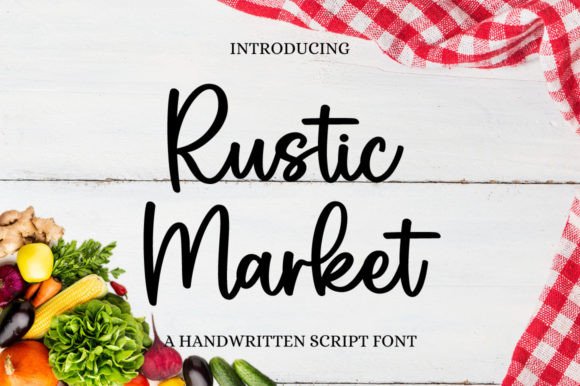
Rustic Market is a flowing handwritten font that sits comfortably between casual and refined. It doesn’t scream for attention like some decorative fonts do, but instead, it invites the viewer in with its balanced curves and subtle movement. It’s not a font for bold headlines or high-tech branding, but it shines in projects that require a personal touch—like boutique identities, handmade shops, and artisanal product packaging.
What stood out during testing was how versatile it felt across different brand touchpoints. Whether I was sketching a logo concept or placing it on a business card layout, the font maintained its elegance without looking out of place. It has a soft personality—not too formal, not too playful—which makes it ideal for brands that want to feel approachable yet polished.
Real-World Design Applications
I tested Rustic Market across a range of branding assets, and here’s how it performed:
- Logo Design: It worked beautifully as a standalone logo for the bakery. I paired it with a simple sans serif for the tagline, and the contrast gave the mark a modern, clean edge.
- Packaging Mockups: On a mockup of a pastry box, the font looked hand-stamped and artisanal. It gave the product a crafted feel without needing extra design elements.
- Social Media Graphics: When used for Instagram story headers, the font’s light strokes and open spacing made it feel fresh and inviting, especially with soft pastel backgrounds.
- Business Cards: At print size, the font held up well as long as it was used at a decent point size. I avoided using it for contact info—better for the brand name and tagline.
- Web Design: As a display font in the hero section of a landing page, it added personality without compromising readability.
When Rustic Market Shines—and When It Doesn’t
Rustic Market is best suited for short-form text—logos, headlines, quotes, and accent phrases. Its delicate strokes make it less ideal for long body copy or small-size applications. I wouldn’t recommend it for legal footers, technical documents, or corporate presentations where clarity and formality are key.
It also doesn’t perform well in high-contrast environments—like black text on a bright yellow background—because the fine lines tend to get lost. If you’re using it digitally, make sure your color choices support legibility.
Font Pairing Tips
One of the most enjoyable parts of working with Rustic Market was experimenting with font pairing. Since it’s a script font with a soft personality, it pairs best with typefaces that offer contrast without clashing:
- Sans Serif: A clean, modern sans like Montserrat or Lato grounds the design and gives it a contemporary edge.
- Serif: For more traditional or editorial-style branding, try it with a low-contrast serif like Merriweather or Playfair Display.
- Handwritten or Script: If you’re going for a whimsical, handwritten look, pair it with a bolder script for headings or accents.
The key is to balance its organic flow with something structured and legible. Avoid pairing it with too many decorative fonts, which can quickly lead to a cluttered look.
Technical and Practical Notes
From a technical standpoint, Rustic Market offers a solid set of features for a premium font. It includes ligatures, stylistic alternates, and swashes that add character when needed. I found the alternates particularly useful for logo design, where a slightly different letterform could enhance the brand’s uniqueness.
It supports a range of multilingual characters, which is always a plus when working with global clients or multilingual branding. The font is available in both desktop and webfont formats, making it usable across both print and digital platforms.
Before using Rustic Market in any client work—especially for commercial design assets like packaging, merchandise, or templates—make sure to review the font licensing. Some fonts are limited to personal use only, and commercial projects often require an extended license.